Simen A. Strandberg Simen A. Strandberg

Rattus Norwegicus: A Filthy Dungeon Romp Through the Worst of Galgenbeck

There is a stairwell in Galgenbeck. It sits between two crooked buildings, unassuming, easy to miss. The locals avoid it. You probably should too. Read on to find out how to get it for free.
There is a stairwell in Galgenbeck. It sits between two crooked buildings, unassuming, easy to miss. The locals avoid it. You probably should too.

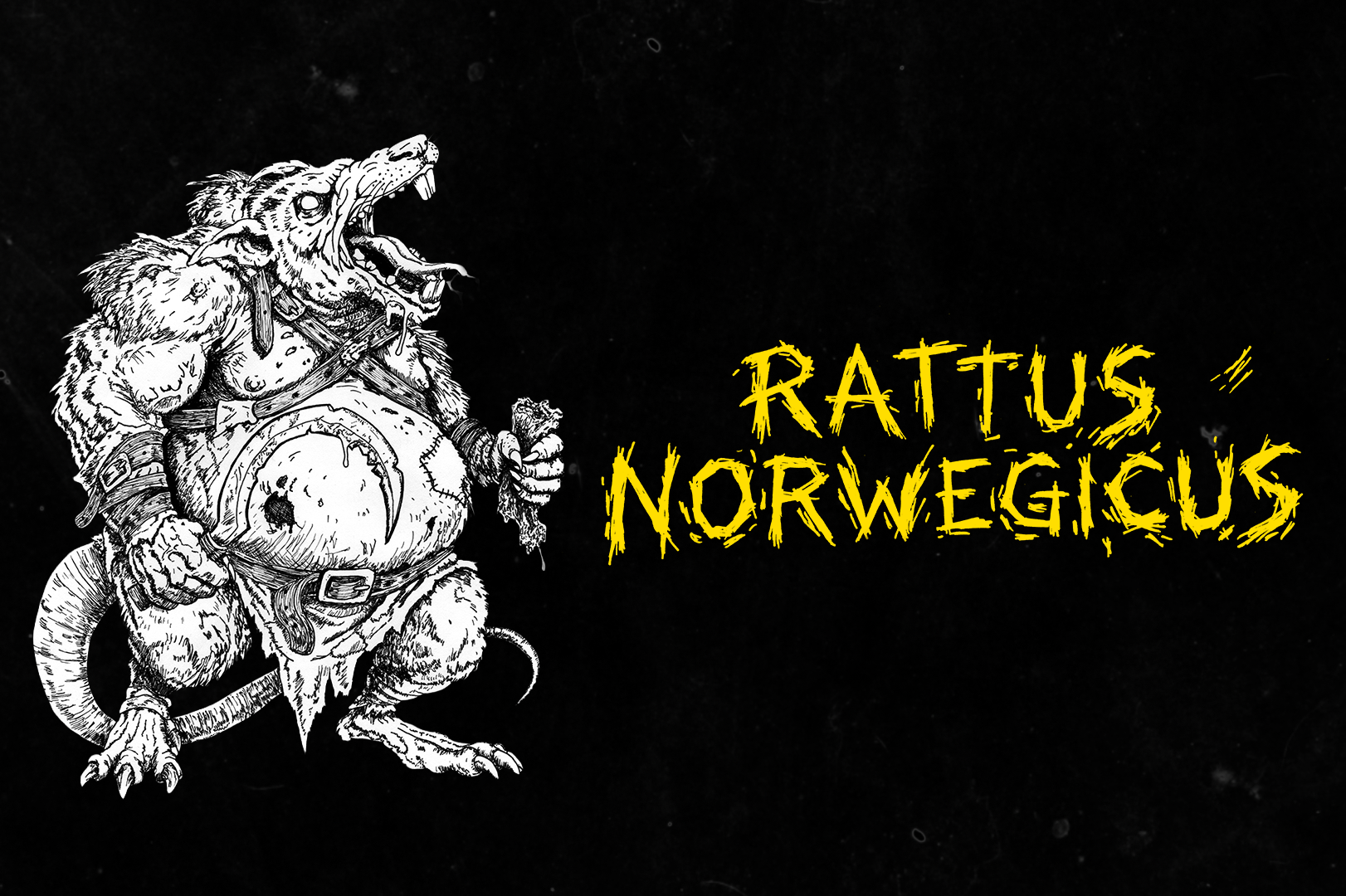
Rattus Norwegicus is Seidmann Games’ Mörk Borg adventure, a 16-page one-shot dungeon romp written by Michael Sollien and illustrated by Nicolai Strøm.

It is, to use the technical term, filthy.

It is also one of the most pick-up-and-play modules we’ve published: tight, mean, full of tables, and over in a single session. If you’ve been looking for a Mörk Borg one-shot with teeth, this is it.

What Is Mörk Borg, and Why Do We Love It?

If you’re new to Mörk Borg, here’s the short version: it’s a Swedish doom metal album that learned how to be a tabletop RPG. Published by Ockult Örtmästare Games and Stockholm Kartell, it’s a rules-light OSR game set at the end of the world, designed to be played fast, dirty, and played with the strong expectation that your character will probably die in a horrible manner.

We love it for reasons that are hard to fully explain without sounding like we’ve lost the plot. The tone is somewhere between black metal, medieval horror, and gallows comedy. The rules fit on a few pages. And somehow, despite or because of all of that, it produces some of the best table moments we’ve ever had. There’s a freedom in a system that doesn’t pretend the world is survivable. When everything is doomed anyway, players tend to let loose resulting in great sessions. If your character succumbs, it’s no bother; rolling up a new would-be-hero is pretty quick and fun.

The Mörk Borg third-party licence is also genuinely generous, which is part of why the ecosystem around it is so rich. Independent publishers can make and sell adventures without jumping through legal hoops, and the result is a sprawling, weird, wildly varied catalogue of content. Rattus Norwegicus sits proudly in that tradition.

The Adventure: Down the Stairwell

The setup is lean and effective: In the cursed city of Galgenbeck, the Rätfölk, the plague-bearing ratfolk, have made their base of operations beneath the streets. The players descend the stairwell. What happens next depends entirely on how clever, how lucky, and how quickly they can move before things go catastrophically wrong.

The dungeon spans nine rooms, each with its own flavour and its own ways to kill you. There’s an entrance reeking of dung and gambling rätfölk. A dinner hall with explosive moonshine. A kitchen staffed by a kidnapped chef who has developed severe Stockholm syndrome and absolutely does not want to be rescued. A temple where ratfolk are voluntarily feeding themselves to a Giant Devouring Slüg. A war room where the boss, who turns out to be a secret human in a rat costume, has plastered the walls with maps and unsolved riddles.

That last detail is worth dwelling on. The Boss is, in fact, a ratcatcher who has gone native. He will plead with the party if cornered, or swallow an acid pill and dissolve his own head rather than be captured. It’s the kind of deranged logic that makes Mörk Borg feel like itself, and Michael has deployed it with obvious relish.

The Slüg Problem

The adventure’s central tension mechanic is elegant in a horrible way. The Giant Devouring Slüg starts the session occupied, eating willing rätfölk in the temple, as one does. But open six doors, and the sacrificial supply runs out. The Slüg gets loose. From that point on, every corridor encounter roll has a chance of producing thirty hit points of acidic, devouring horror that will explode if it touches salt.

This is exactly the kind of ticking-clock design that makes OSR adventures sing. The party doesn’t know exactly when it’ll happen. They just know it will. Every door they open is a choice, and the dungeon keeps a quiet count.

Ratfolk rat climbing the dungeon walls, with a deadly knife in it's mouth, ready to pounce.

Tables, Tables, Tables

Rattus Norwegicus is generous with its random tables, which is to say it’s generous with replayability. Before the session even starts, each player rolls on a rumours table — some true, some false, all useful for building suspicion and paranoia before a single die is rolled in anger. There’s a separate table for why your scvm has descended into this particular hellhole, ranging from mercenary contracts to a deep personal hatred of rats. And when you kill a rätfölk, you roll to loot the body — results ranging from nothing but greasy fur to a vial of Bubonic Plague (“better not open this one”).

The code-box in the boss’s lieutenant’s quarters deserves a special mention. Its contents are randomised across four options, each of which points toward a different published adventure — The Goblin Grinder, Bastard of the Badlands, The Black Stump, Devil’s Tomb. It’s a small touch, but it transforms what could be a self-contained one-shot into a hook for a longer campaign, which is exactly the kind of thing a good adventure should do.

The Illustrations

Nicolai Strøm, known on social media as @houseofadelsten, is Seidmann Games’ in-house illustrator, and his work is a significant part of what makes our catalogue look like itself rather than like everyone else. For Rattus Norwegicus, he’s produced original artwork that fits the adventure’s tone precisely: grotesque, dark and full of that good mood-setting.

Michael notes in his afterword that this is a remaster of an adventure he originally published on itch.io — and that Nicolai’s illustrations are a substantial part of what makes this version the definitive one. We’d agree. The art elevates the writing, and the writing gives the art somewhere horrible to live.

Who Is This For?

Rattus Norwegicus is for Mörk Borg players who want a tight, playable one-shot they can run on short notice. It’s for GMs who appreciate a dungeon with a sense of humour and a body count. It’s for OSR fans who want something that plays fast annd hits hard, and doesn’t outstay its welcome.

It won’t take you long to prep. The random tables do a lot of the work. The dungeon is small enough to run in a single session and weird enough to make that session memorable. It sits comfortably alongside our Shadowdark adventures — Dawn of the Goat [link: Dawn of the Goat on DriveThruRPG] and On the Ledge of My Seat [link: On the Ledge of My Seat on DriveThruRPG] — as the kind of thing we like to make: strange, lethal, and distinctly Norwegian in its general outlook on human survival.

How to Get It

Rattus Norwegicus is available on DriveThruRPG for $4.99 [link: Rattus Norwegicus on DriveThruRPG].

Subscribe to our newsletter and you’ll get it for free. We’d rather have you in the dungeon than not.

Calahan, the right hand ratfolk man in the deep dungeons beneath Galgenbeck.
Read More
Shadow Delves, Dark North Conglomerate, Shadowdark RPG Simen A. Strandberg Shadow Delves, Dark North Conglomerate, Shadowdark RPG Simen A. Strandberg

«The cold is the timer»: A conversation with Anmia, author of “On The Ledge of My Seat” for Shadowdark RPG

Some of the best adventure modules come from a single, stubborn idea. For Anmia, the idea was a question: What happens when you replace the horizontal sprawl of a classic dungeon with something vertical instead? Read on to find out.

Adventurer standing on an icy cliff in front of a dilapidated draw bridge

If the icy cold winds don’t get you, the fall most definitely will.

Some of the best adventure modules come from a single, stubborn idea...

For Anmia, the idea was a question: What happens when you replace the horizontal sprawl of a classic dungeon with something vertical instead? What happens when you swap the torch for the cold? For Anmia, who by day works in IT, but at night GMs at Outland or tinker with tabletop games,  the answer resulted in “On the Ledge of my Seat.” (OTLOMS)

This is the second issue of Seidmann Games’ Shadow Delves series, where different writers and designers come together to create modules for Shadowdark RPG. We sat down with Anmia to talk design philosophy, deliberate frustration and why she thinks survival beats combat every time.

After you’re done reading, check out the adventure itself by heading over to DriveThruRPG.

From EVE Online to the Dungeon table

Anmia’s way into tabletop RPGs is, looking back, quite indirect. She was originally supposed to play D&D with people she know from EVE Online. However, time zones got in the way and it never came to fruition. A few years later, a session with her cousin kicked things off properly. From there, curiosity took over.

“I started buying other rules than D&D and trying them out,” she says. “From there I ended up writing my own little game, which is a bit rough around the edges.”

The instinct to try things, break them apart, and build something new is visible in OTLOMS.  This isn’t written by someone who spent years perfecting classical dungeon design, but rather written by someone who took another approach. And that’s precisely what makes it interesting.

Verticality, cold and a different kind of pressure

The original idea was spatial: “The initial idea was to replace the horizontal nature of most dungeons with verticality,” Anmia esxplains. Chinese temples in valleys came into the picture for a while, pulling things back towards the horizontal. Then a new mechanic arrived and changed everything: using the cold climate as the pressure mechanic, instead of the torch which is prevalent in most Shadowdark adventures.

In Shadowdark, the real-time torch, burning for one actual hour while the Game Master (GM) watches a hidden timer, is one of the system’s most known design touches. OTLOMS takes that same logic and applies it to temperature. Every thirty minutes of real time, it gets cold enough that improperly dressed characters can straight up die. The cold doesn’t announce itself, it just arrives.

When asked what kind of experience she wanted to create, Anmia is quite honest: “A bit of frustration, maybe? The players are locked in with few good ways out. It’s unfair, and that's sometimes just how it is.”

OTLOMS isn’t trying to give players a fair fight. It’s trying to put the somewhere genuinely difficult and see how they think their way out. Anmia is quick to note that there is, theoretically, a way through without combat or serious risk, but figuring that out is entirely up to the players.


A wooden chest attached to the wall with a chain link wrapped around it.

Why Survival Beats Combat

One of the clearest threads in how Anmia talks about her work is a preference for survival and pressure over straightforward combat encounters. The reasoning is practical: “Combat is fun, but it quickly becomes round after round around the table. Survival often creates more immersion and tension. It requires a different kind of collaboration.”

This feeds directly into what makes OTLOMS  feel different from a more traditional dungeon crawl. The threat isn’t primarily monsters, it’s the environment, the clock, and the limits of your character’s preparation. Players who come in expecting to cut their way through will find the module frustrating in exactly the way Anmia intended.


The Design Details She’s Most Proud Of

Ask Anmia what she’s most satisfied with in the module and she answers without hesitation: using AC as DC.

“Someone else suggested it, but now I can finally watch the grin fade from the paladin or fighter in heavy armour.”

It’s a small mechanical inversion with large table consequences. Armour Class, normally a defensive stat that protects you, becomes the difficulty of certain checks or interactions within the module. The better armoured you are, the harder some things become. It’s the kind of twist that makes experienced Shadowdark players do a double-take, and it fits perfectly with the module’s broader philosophy: the things that usually protect you might not help you here.

On Shadowdark as a System

Anmia is clear-eyed about why Shadowdark works for this kind of adventure, and honest about the fact that OTLOMS  might have been written for something else entirely if she hadn’t been making something specifically for the system.

“It’s the OSR part that stands out most,” she says. “Where some systems and genres call for high detail and story, OSR adventures lean more toward a framework you can build and tinker with. That statement will probably earn a comment or two.”

She also flags something that matters practically for independent designers: the Shadowdark licence is flexible and creator-friendly, making it easier to publish third-party content without legal friction. That openness is a big part of why the Shadowdark third-party ecosystem has grown as fast as it has , and why Shadow Delves, Seidmann Games’ monthly Shadowdark adventure label, has been able to bring Norwegian designers into that space.


What’s next for Anmia

There’s more coming. At minimum, another Shadowdark adventure, already somewhere in the backlog. She also mentions work for Twilight 2000 and Delta Green, updates to existing releases, and a roleplaying idea she needs to find time for. The restlessness that led her from EVE Online to dungeon design isn’t going anywhere.

Her advice for GMs running On the Ledge of My Seat for the first time is characteristically no-nonsense: read it through, punish players for stupidity, think carefully about what each area looks like and what happens there. And remember; every thirty minutes, the cold comes.

Anmia can be found sharing thoughts about TTRPG, design and other tid bits over at BlueSky.


On the Ledge of My Seat and Dawn of the Goat are both available on DriveThruRPG. These are the first two issues of Shadow Delves, Seidmann Games’ Shadowdark RPG modules, made by northern designers and writers making out Dark North Conglomerate. The adventures are often built for a single session. Easy to run, difficult to survive. To get updates on all of our releases and happenings, subscribe to our newsletter.


An adventurer scaling an icy mountain wall.


Read More